
How a project moves from idea to release.
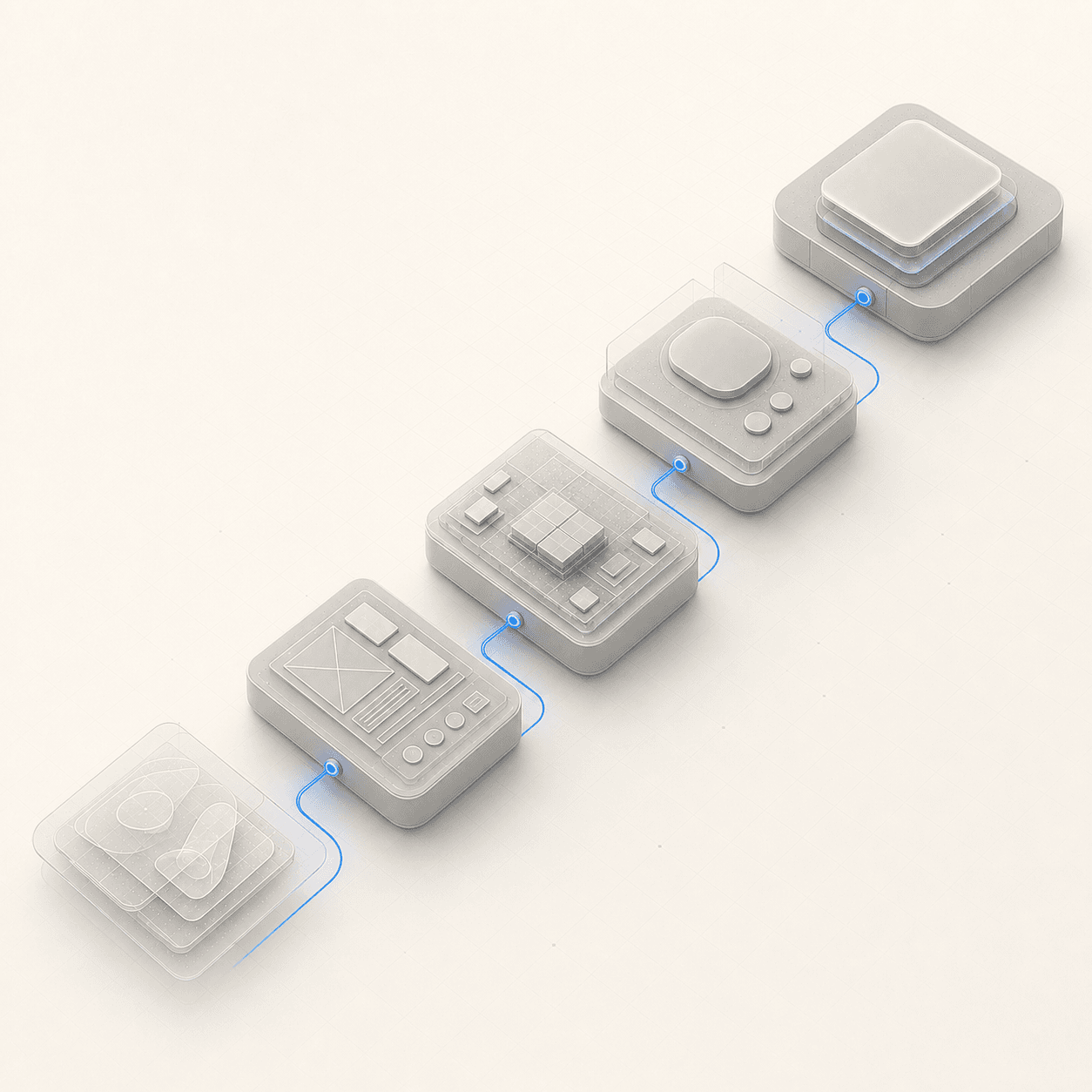
Every project at BYTE DASH follows the same five stages. The depth of each stage depends on the size and maturity of the project — a new product idea moves through all five in full, while an existing platform might begin partway through.
Understand the problem before proposing a solution.
We start by understanding the business, the users, and the problem the product needs to solve, including any existing systems, constraints, or prior attempts.
- Stakeholder discussions
- Review of any existing product or systems
- Defining goals and success criteria
- Identifying constraints and risks
Expect direct questions about the business problem, not just a feature list — this stage works best with access to the people who understand the problem firsthand.
- Project brief
- Scope outline
- Key risks and open questions
Turn requirements into a structure people can use.
We translate the brief into user flows, information architecture, and interface design, moving from wireframes to detailed UI as the direction is confirmed.
- User flow mapping
- Wireframing
- UI design
- Design system setup
- Stakeholder review
Structured review points at each stage — feedback shapes the direction before it's carried into wireframes.
- Wireframes
- UI designs
- Design system components
- A clickable prototype, where useful
Develop the product with visible, regular progress.
Engineering begins once the design direction is confirmed. We build in stages, with working versions available for review throughout rather than only at the end.
- Technical architecture
- Front-end and back-end development
- Integrations
- Internal QA
Regular access to builds, and clear communication about progress and any changes to scope or timeline.
- Working builds at regular intervals
- Technical documentation as it develops
Confirm the product works the way it's meant to.
Before launch, we test the product against real conditions — different devices, network states, and user behaviour — alongside functional and usability testing.
- Functional testing
- Cross-device and cross-browser checks
- Usability review
- Bug fixing
Visibility into what's been tested and what's outstanding, with a shared view of what's blocking release.
- Test results
- Resolved issue log
- Release-ready build
Release the product, then keep it working well.
We support the release itself, then monitor early usage and address anything that needs attention. Many projects continue into ongoing iteration after this stage.
- Release and deployment support
- Monitoring post-launch performance
- Prioritising follow-up improvements
Support through the release itself, and a shared view of what to prioritise afterwards.
- Live product
- Launch summary
- Recommendations for next steps
This process is a framework, not a fixed script. Projects that start with an existing product, a partial design, or a fixed deadline are scoped to fit — some stages may run in parallel, and the time spent in each is set by the project's own scope and maturity, not a fixed template.